A dual-fuel range combines a gas cooktop — where instant, adjustable flame gives you precise control over heat — with an electric oven, where consistent radiant heat and convection produce more even baking results than gas. It’s the configuration serious home cooks tend to reach for first when budgets allow. The complication: most dual-fuel ranges ship pre-configured for natural gas (NG), a utility pipeline fuel. If your home or property runs on propane (LP) — the pressurized liquid stored in a tank outside — you need a conversion. LP burns at a different pressure and through smaller orifices (the tiny openings in each burner) than NG, so the range literally cannot function correctly without a factory-supplied LP conversion kit swapping those components. This guide covers what actually happens when you make that conversion across the four brands that dominate the serious end of the 36-inch dual-fuel market: Wolf, BlueStar, Bertazzoni, and ZLINE. We’ll name the tradeoffs, show the numbers, and give you a clear decision framework before you sign anything.
Why BTU Claims Deserve Skepticism on LP
BTU stands for British Thermal Unit — the standard measure of heat output from a burner. Manufacturers publish BTU ratings prominently, and buyers use them as a proxy for power. The problem is that those headline numbers almost always reflect natural gas operation, not propane.
This isn’t deceptive marketing so much as an industry-wide convention that creates real confusion. The Propane Education & Research Council (PERC), in their Propane Appliance Conversion Guide (2024 edition), notes that LP orifice sizing for converted residential ranges typically delivers output within approximately 5–15% of the NG rating — but that spread is not uniform across burner types or brands. High-output power burners (the largest burner on a range, often 18,000–23,000 BTU on NG) tend to hold their ratings better on LP than precision simmer burners do. Simmer burners are where LP conversion quality differences become most visible: a poorly sized LP orifice on a low-output burner can produce an unstable, lifting flame rather than a true low simmer.
What this means practically: when a brand advertises a 23,000 BTU dual-stacked power burner, you should expect somewhere between 20,000 and 23,000 BTU on LP depending on the precision of their conversion kit. The bigger question — the one that separates a $400 kit from a $4,000 range experience — is whether the simmer burners hold a stable, low flame at LP operating pressure. Per ANSI Z21.1 Household Cooking Gas Appliances (current edition), LP residential ranges are designed to operate at a nominal supply pressure of 11 inches water column, compared to 7 inches for NG. That pressure difference is what drives the orifice swap requirement, and it’s also what exposes simmer burner calibration weaknesses after conversion.
By the Numbers: Nominal BTU on NG vs. LP Across Burner Classes
| Burner Type | Typical NG Rating | Expected LP Output | Conversion Risk |
|---|---|---|---|
| Power / Dual-Stacked | 18,000–23,000 BTU | 17,000–22,000 BTU | Low |
| Standard Sealed Burner | 9,500–12,000 BTU | 9,000–11,500 BTU | Low–Medium |
| Simmer / Precision | 700–1,500 BTU | 500–1,400 BTU | Medium–High |
The simmer row is where LP conversions either earn their price premium or expose their weak points.
How the Four Major Brands Compare on LP Conversion Quality
Wolf (Sub-Zero Group)
Wolf’s 36-inch dual-fuel line — primarily the DF365 series — ships with a Wolf-branded LP conversion kit that is widely regarded among installers as the most complete in the class. The kit includes replacement orifices for every burner, a pressure regulator, and a brass orifice for the oven safety valve. This Old House, in their editorial coverage of propane range conversion procedures, identifies full orifice replacement — as opposed to partial kits that only address cooktop burners — as the minimum bar for proper operation. Wolf meets that bar across the entire appliance, cooktop and oven alike.
Owners consistently report stable dual-stacked burner performance on LP and, critically, a genuine low simmer that holds without lifting. Wolf’s dual-stacked burner system uses concentric inner and outer flame rings that can operate independently. That architecture appears particularly tolerant of the LP pressure differential, likely because the inner simmer ring operates at its own dedicated, calibrated orifice size rather than sharing orifice sizing with the outer power ring.
The tradeoff is cost. As of mid-2026, Wolf DF365 configurations in 36-inch dual-fuel run approximately $7,200–$9,500 depending on configuration and sourcing. The LP kit is typically included or available at no additional cost through authorized dealers, but Wolf recommends installation by a qualified LP technician — a service call that adds $150–$350 depending on market.
 product image](/images/external/3d95cbf92a20.jpg)
ZLINE CDRZ-36-CB
$3,679.99
In stock on Amazon
Check price on AmazonBlueStar
BlueStar’s flagship residential line runs open burners rather than sealed, which changes the LP conversion dynamic meaningfully. Open burners sit above the cooktop surface and allow full orifice access, making LP conversion kits mechanically simpler to install correctly and to adjust in the field. Their 36-inch dual-fuel RNB series carries a published power burner rating of up to 25,000 BTU on NG — spec-sheet dominant in this class — with LP output documented at approximately 23,000 BTU, a tighter retention of rated output than most competitors achieve.
The open-burner design also makes field adjustments more accessible when LP pressure at the regulator runs slightly off, which matters for rural and off-grid installs where tank pressure varies seasonally. For experienced LP installers, this is an underrated advantage.
The documented concern: BlueStar’s simmer burner on LP generates more owner-reported variability than the power burner. Serious Eats, in their editorial overview of pro-style range characteristics, identifies simmer consistency as a key differentiator for buyers who sauce and temper frequently. BlueStar reviews show more spread on this dimension than Wolf. Some owners report excellent simmers; others — particularly in colder climates where LP tank pressure drops — report lifting and instability. This is typically a calibration and regulator-quality issue that a skilled installer can correct, but it requires more active commissioning than Wolf demands.
Street pricing on the BlueStar RNB 36-inch dual-fuel runs approximately $6,000–$7,800 as of mid-2026.
ZLINE CDRZ-36-CB
$3,679.99
In stock on Amazon
Check price on AmazonBertazzoni
Bertazzoni occupies the most interesting middle position in this comparison: Italian-designed aesthetics at a price point roughly 20–35% below Wolf and BlueStar, with LP conversion quality that is genuinely competitive on current production but requires diligence in specification.
Their 36-inch Professional Series dual-fuel ships with an LP kit, but installer reports indicate that kit quality varied by production year on units manufactured through 2023, with documented orifice sizing inconsistencies on the simmer burner. Bertazzoni addressed this in revised kits released in 2024. Buyers purchasing new 2025–2026 production should be in good shape, but anyone sourcing a floor model or lightly used unit should confirm which kit version is installed or budget for a replacement kit before commissioning.
Consumer Reports’ gas range buying guide notes that Bertazzoni scores well on owner satisfaction at the brand level but carries more installation-quality variance than the top two competitors — a finding that aligns with the LP conversion picture. The dual-fuel oven performance is broadly praised; the LP cooktop conversion is where specification vigilance pays off most.
Mid-2026 pricing: $4,200–$5,600 depending on configuration and finish. The price-to-performance case is real for buyers willing to verify the conversion kit revision before purchase.
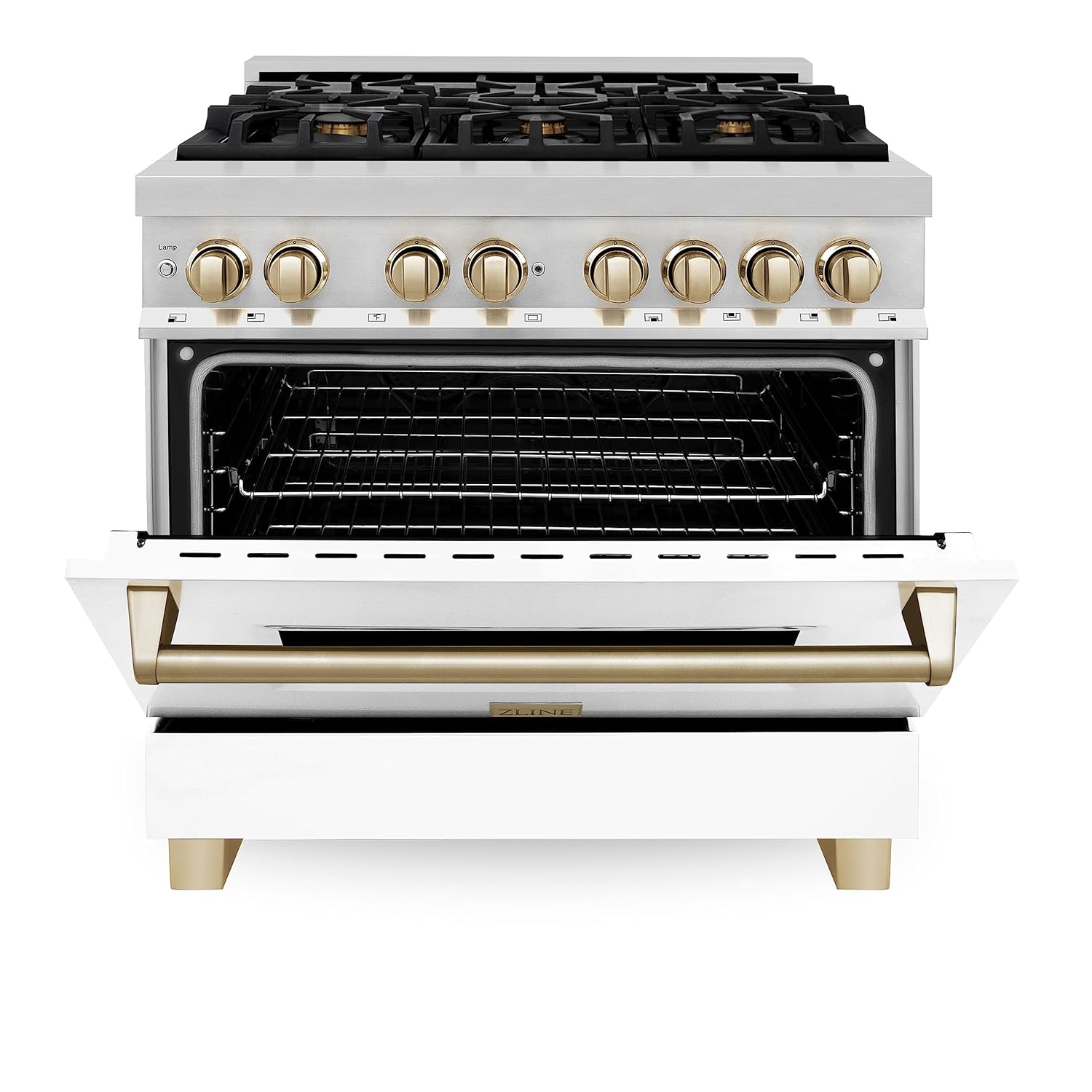
ZLINE RAZ-WM-36-G
$3,439.99
In stock on Amazon
Check price on AmazonZLINE
ZLINE’s 36-inch dual-fuel (RA36 and RAS-36 series) is the most accessible premium option in this comparison, and its LP story is the most polarized. At $2,500–$3,800 street price, ZLINE brings dual-fuel into reach for buyers who cannot stretch to Bertazzoni minimums. Documented power burner performance on LP is solid — owners report good high-heat retention, and searing and rapid-boil use cases are well served.
The documented weak points are two. First, the LP orifice included for the simmer burner generates the most owner complaints about flame instability of any brand in this comparison, appearing consistently across verified purchase reviews at major appliance retailers. Second, ZLINE’s after-purchase technical support for LP conversion troubleshooting draws more negative reports than the other three brands. For an installer who understands LP pressure systems and can calibrate independently, this is manageable. For a first-time LP installation without a skilled technician, it is a meaningful risk.
Consumer Reports’ reliability data categorizes ZLINE below average for this range type in year-one reliability — not a certainty of failure, but a real input for a purchase at this price point. Buyers who prioritize precision simmering or who are commissioning a first-time LP installation should weigh that data carefully.
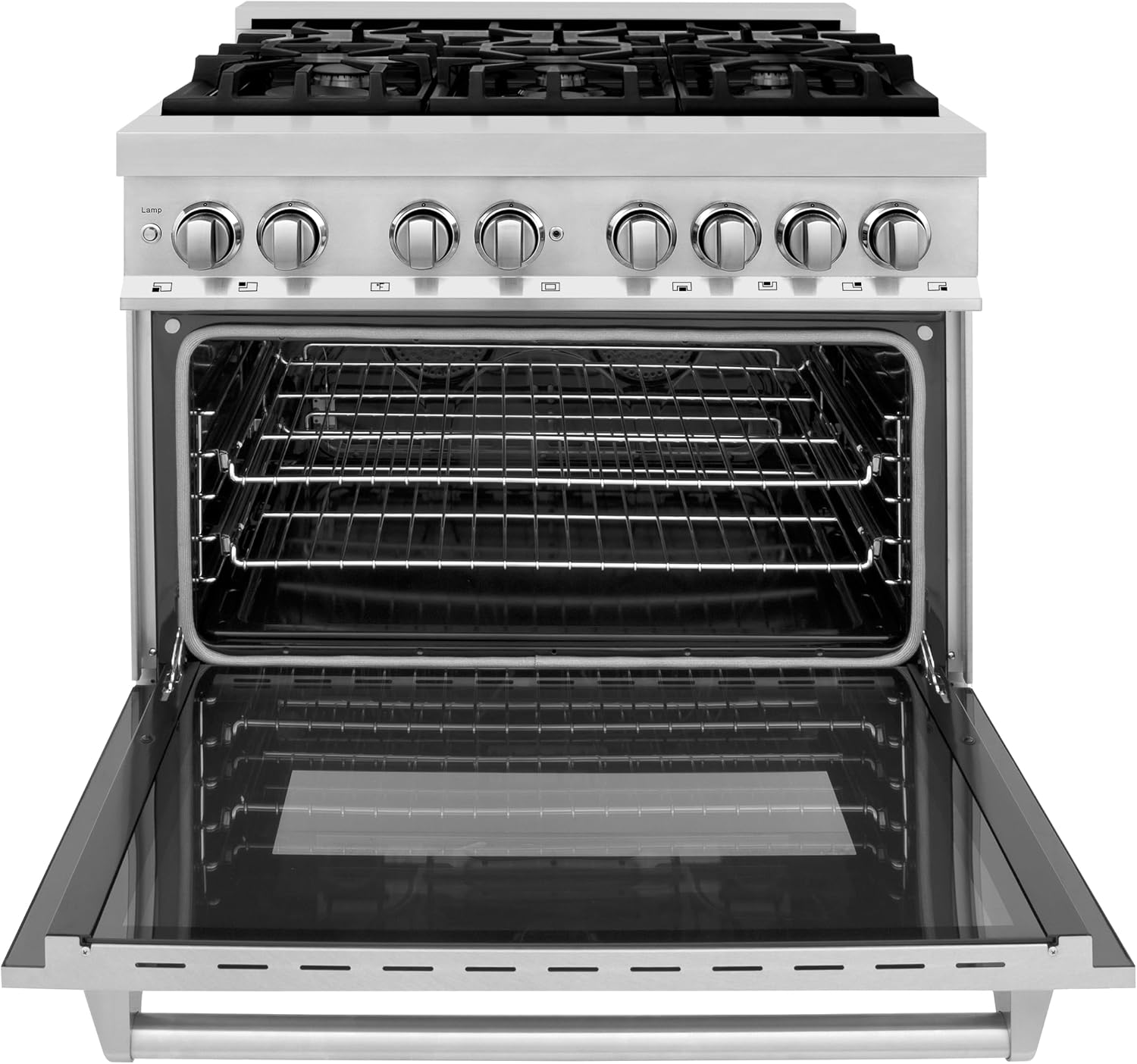
ZLINE RA-SN-36
$2,974.99
In stock on Amazon
Check price on AmazonThe Installation Variables That Override Brand Differences
No LP conversion analysis is complete without acknowledging that the regulator, gas line sizing, and tank setup can override brand-level quality differences in either direction.
LP ranges at 36 inches with multiple high-BTU burners running simultaneously create substantial demand on a gas supply system. The Propane Education & Research Council’s Propane Appliance Conversion Guide (2024 edition) identifies two underspecified installation risks that owners consistently report causing apparent “range problems” that are actually infrastructure problems:
1. Undersized line or regulator. An LP range at full output across four burners can easily draw more than the supply capacity of a residential two-stage regulator sized for water heater and dryer loads. Owners who add a premium range to an existing LP system without upsizing the second-stage regulator frequently report low-flame symptoms on the power burner that they attribute to the conversion kit — but the actual cause is supply pressure drop. PERC’s guide recommends confirming total BTU load against regulator capacity before commissioning any high-output LP appliance.
2. Tank distance and temperature. LP pressure drops as tank temperature drops. Rural and off-grid installs where the tank is located more than 50 feet from the regulator, or in climates with extended temperatures below 20°F, need to account for this in regulator selection and line sizing.
This Old House’s editorial guidance on propane range installation recommends a dedicated second-stage regulator set to 11 inches water column (± 0.5 inches) for ranges, isolated from other appliances sharing the same LP run. Any installer who does not confirm this before commissioning — whether the range is a Wolf or a ZLINE — is leaving documented performance on the table regardless of how good the conversion kit is.
The Decision Framework
If you’re under LOI on a kitchen renovation or finalizing a range specification, here is the honest if-then:
If your installation is a first-time LP setup with no existing infrastructure, the higher conversion kit quality at Wolf or BlueStar reduces commissioning risk enough to justify the premium. You have one shot to size the regulator and line correctly; buy the range that is most tolerant of minor calibration variance.
If you are an experienced LP installer or have a trusted LP technician commissioning the unit, Bertazzoni (2024-and-later production) closes the gap with the top tier meaningfully. The 25–35% savings is real money; the conversion quality is verified on current production. Confirm the kit revision before purchase.
If your primary use case is high-heat cooking — searing, wok work, rapid boiling — with limited precision simmering, ZLINE’s LP power burner performance is documented and solid. The simmer limitation matters less for that use case. Budget for independent calibration labor and verify your LP infrastructure before the range arrives.
If precision simmering is central to how you cook — stock reductions, chocolate tempering, delicate sauces — Wolf’s dual-stacked simmer ring is the only option in this comparison where LP simmer performance draws consistent positive reports without installer intervention. The price premium buys that specific, documented outcome.
The spec sheet is the starting point. The conversion kit is the execution. The regulator is the infrastructure that makes both of them honest.