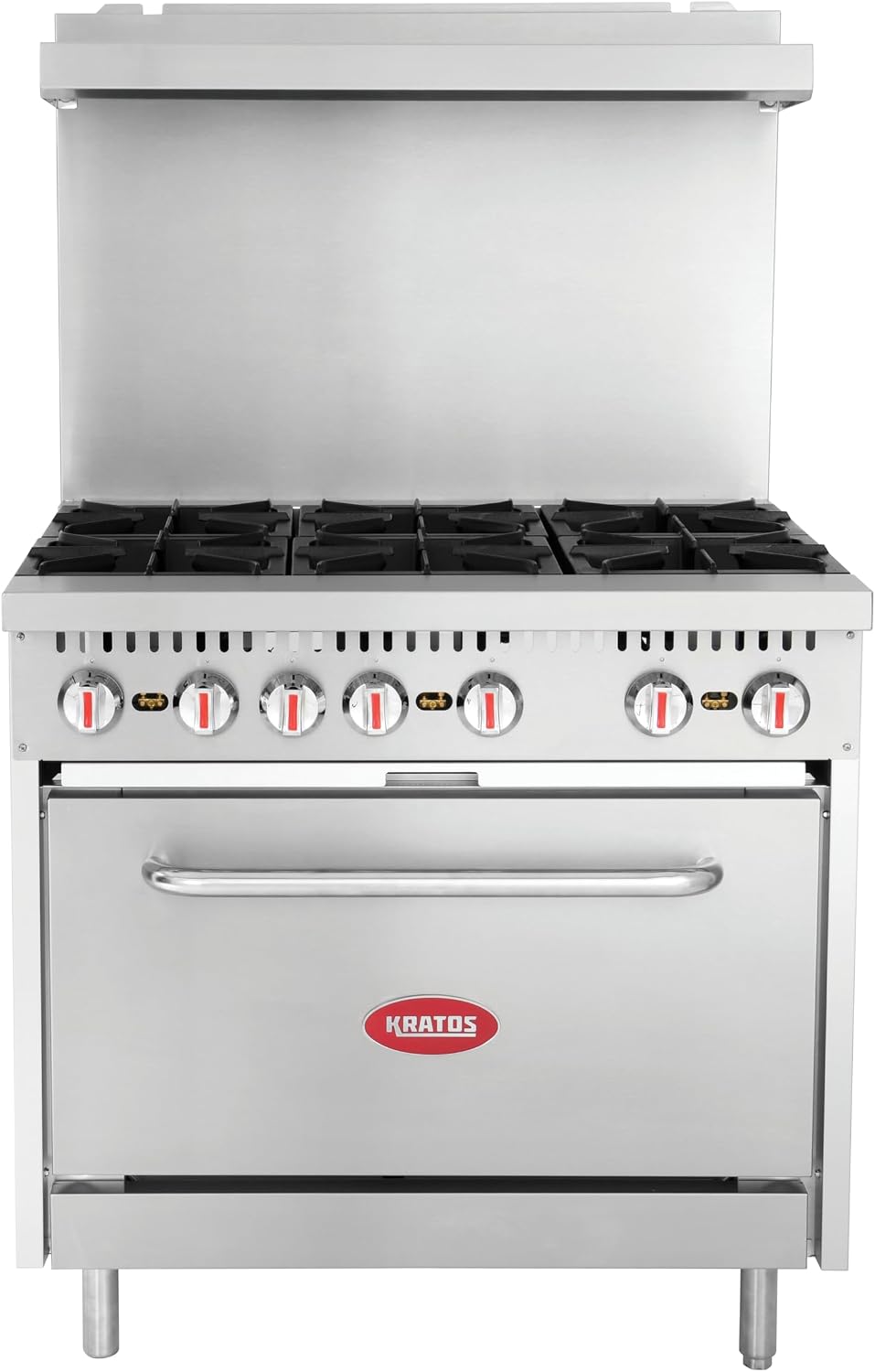
If you’ve ever stood in an appliance showroom staring at a range that looks like it belongs in a steakhouse kitchen, you’ve probably noticed a number on the spec card that sounds almost absurdly large — something like 210,000 BTU total output. A BTU, or British Thermal Unit, is simply a measure of heat energy: one BTU is the amount of heat needed to raise one pound of water by one degree Fahrenheit. When we talk about a range’s total BTU rating, we’re adding up the maximum output of every burner simultaneously. For context, a standard residential gas range typically delivers somewhere between 40,000 and 65,000 BTU total across all four burners. So a commercial-style range claiming 210,000 BTU is, on paper, three to five times more powerful. For propane cooks specifically — whether you’re building a high-end kitchen in a rural home or converting a vacation property to LP — that gap between the numbers and what those numbers actually deliver in a home setting is where the real decisions live. This article walks you through exactly that: what the BTU spec means for propane supply, what it does and doesn’t give you in daily cooking performance, and how to decide whether a commercial-style LP range fits your kitchen or is a specification you’ll be fighting against for years.
| EDITOR'S PICKKratos 60" Wide Commercial Gas… | Mid-tier[Atosa AGR Commercial Gas Range](https://www.amazon.com/dp/B07JPHKLV6?tag=greenflower20-20) | Budget pickKratos 36" Commercial Gas Range… | |
|---|---|---|---|
| BTU Output | 280,000 | — | 210,000 |
| Propane Ready | — | ✓ | ✓ |
| Oven Count | 2 | 1 | 1 |
| Width | 60" | 36" | 36" |
| Griddle | ✓ | — | — |
| Price | $2,799.00 | $1,864.00 | $1,499.00 |
| See on Amazon → | See on Amazon → | See on Amazon → |
BTU and Propane: The Supply Chain Behind the Flame
Before you can evaluate whether 210,000 BTU makes sense for your home, you need to understand that a BTU rating is a demand figure, not a guarantee. It tells you how much fuel the range will consume at full bore — and your propane supply system has to be capable of delivering that fuel at the right flow rate and pressure, or the burners underperform.
Propane is delivered to a residential range at a working pressure of 11 inches water column (often written as 11” W.C. — a low-pressure measurement used in gas appliance work, roughly equivalent to 0.4 PSI). The gas line between your tank and the range has to be sized to deliver enough volume — measured in cubic feet per hour, or CFH — to feed the appliance at that pressure without starving it. This is where many commercial-style range installations quietly fail.
Per the National Fuel Gas Code (NFPA 54, 2024 Edition), pipe sizing is determined by the total BTU load of all connected appliances, the pipe material, and the length of the run from the meter or regulator to the appliance. A 210,000 BTU range running on propane consumes approximately 2.1 gallons per hour at full output (propane contains roughly 91,500 BTU per gallon). If your existing ½-inch black iron or CSST line was sized for a 65,000 BTU range, it was almost certainly not sized for this load. This Old House’s guidance on gas line sizing reinforces this point clearly: undersized lines create a pressure drop at the appliance that manifests as lazy, yellow-tipped flames, burners that won’t light reliably, and in worst cases, dangerous incomplete combustion.
By the numbers:
- Standard residential range: 40,000–65,000 BTU total / ~0.4–0.7 GPH propane
- Commercial-style home range (e.g., Wolf 36”, BlueStar 36” LP): 100,000–135,000 BTU total / ~1.1–1.5 GPH propane
- True commercial range (restaurant-grade): 180,000–280,000+ BTU total / ~2.0–3.0 GPH propane
- Minimum recommended LP tank for a 130,000 BTU range as primary cooking appliance: 120-gallon above-ground (per PERC appliance efficiency documentation)
The takeaway: the ranges sold to home buyers as “commercial-style” from brands like Wolf, BlueStar, and Bertazzoni typically land in that 100,000–135,000 BTU total range — not the 210,000+ figure sometimes used in marketing headlines. That headline number often reflects a hypothetical six- or eight-burner configuration at maximum, or blends in the broiler output. Knowing the per-burner peak matters more for your gas line calculation than the aggregate.
What High BTU Actually Buys You in a Propane Home Kitchen
Here’s where experienced buyers sometimes miscalibrate: more BTU does not mean everything cooks faster. It means specific tasks become dramatically more capable, while others remain unchanged or even become harder.
Where high output wins: A single high-output burner rated at 22,000–25,000 BTU — like the primary power burner on a BlueStar 36-inch LP or a Wolf M Series — can bring a large stockpot of water to a rolling boil in roughly half the time of a standard 12,000 BTU burner. For searing proteins in a cast iron pan, rapid wok cooking, or deep frying with temperature recovery between batches, the performance difference is real and significant. Serious Eats has documented why high-BTU burners produce the kind of Maillard browning and wok hei that lower-output residential burners simply can’t replicate — the heat flux (heat delivered per unit area per unit time) is categorically different.
Where it doesn’t matter: Simmering hollandaise, melting chocolate, maintaining a braising temperature — these tasks run at 500–2,000 BTU, nowhere near maximum output. In fact, owners of some commercial-style ranges note that the simmer performance is often worse than a standard residential range, because the burner geometry optimized for high-heat output can be choppy and unstable at the very low end. BlueStar has specifically addressed this with their proprietary brass burner design and discrete simmer settings; Wolf’s dual-stacked burner on M Series models is also designed to split the flame for a genuine low simmer. These are engineering solutions to a real problem, and it’s worth reading through Wolf’s LP technical documentation and BlueStar’s spec sheets to understand how each manufacturer handles the simmer floor.
The LP-specific complication: Propane burns at a higher flame temperature than natural gas and requires different orifice sizing (smaller orifices to restrict flow, because LP has a higher BTU content per cubic foot). A range that is LP-converted from a natural gas original — versus one designed from the ground up for LP — may not achieve its rated BTU on propane. The conversion kit quality discussion is central here: owner forums consistently surface reports of ranges running rich or lean after kit installation, with burner tuning required. This is a known variability point across the industry, not a fringe issue. If you’re buying a range that ships as natural gas with an LP kit in the box (common at the mid-tier with GE, Samsung, and Frigidaire), budget time and possibly a service call to get the pressure and orifice tuning right.
Venting, Make-Up Air, and the Code Realities Nobody Puts on the Spec Card
A 130,000 BTU range is not just a cooking appliance — it’s a significant combustion load and a major heat source in an enclosed space. Two regulatory areas that catch home buyers off guard in 2025–2026:
Range hood sizing: The general rule of thumb in residential ventilation has historically been 100 CFM (cubic feet per minute of exhaust airflow) per 10,000 BTU of range output. A 130,000 BTU commercial-style range therefore suggests a 1,300 CFM hood — a number that moves you firmly into commercial hood territory and, in many jurisdictions, triggers fire suppression system requirements. ASHRAE Standard 62.2-2022 sets the residential indoor air quality framework, and local building codes may impose additional requirements on combustion appliance ventilation. This is not theoretical: installers at the premium tier report that range hood specification has become a significant point of friction in kitchen renovations involving Wolf and BlueStar installations.
Make-up air: When a powerful exhaust hood pulls 1,000+ CFM out of a home, that air has to come from somewhere. Without a dedicated make-up air system (a controlled fresh-air inlet that replaces exhausted air), negative pressure in the home can backdraft other combustion appliances — water heaters, furnaces — creating a carbon monoxide risk. Many jurisdictions now require make-up air systems for any residential hood exceeding 400 CFM. The 2024 edition of NFPA 54 and local amendments are the authoritative source here; your installer should pull the permit and verify local requirements before finalizing the hood specification.
If you’re building an outdoor kitchen with a commercial-style LP range — a growing segment served by brands like Lynx, Blaze, and Bull — the venting equation changes entirely (open air is its own exhaust system), but the gas line sizing and regulator requirements still apply in full.
Decision Framework: Is a Commercial-Style LP Range Right for Your Setup?
This is where the tradeoffs crystallize into a decision rule.
Go commercial-style if:
- Your cooking regularly involves high-heat techniques — searing, wok cooking, rapid boiling for pasta or canning — that genuinely benefit from 18,000–25,000 BTU single-burner output.
- You’re running a 120-gallon or larger LP tank with a two-stage regulator already sized for the load, or you’re doing a full infrastructure build where sizing it correctly from scratch is part of the scope.
- Your kitchen ventilation budget includes a hood sized to match (and you’ve verified local code on make-up air before finalizing the design).
- You’ve compared the LP conversion approach — kit-converted versus LP-native — and selected accordingly. BlueStar ranges are built for LP from the ground up; Wolf and Bertazzoni ship as NG-primary with LP conversion kits. Both approaches can work well; the LP-native path removes one variable.
- Your budget covers not just the range ($2,500–$10,000+) but the full system: upsized gas line, premium hood, possibly make-up air, and professional LP conversion/commissioning.
Pause and reconsider if:
- Your existing LP infrastructure was sized for a standard range and a water heater — you’ll need a gas line assessment before buying, and the upgrade cost can be $800–$2,500 or more depending on run length and access.
- Your primary cooking style is low-and-slow: braises, delicate sauces, baking. A commercial-style range with a mediocre simmer floor may actually perform worse for your real use case than a well-specified mid-tier range with a dedicated simmer burner.
- You’re in a propane rural setup with a 100-gallon or smaller tank and refill access is seasonal or infrequent. Full-bore operation on a high-output range can draw down a smaller tank faster than your delivery schedule supports.
- You’re buying a floor model or clearance unit and haven’t verified whether the LP conversion kit is included, installed, or tuned. This matters — a range at 15% off that needs a $400 service call and a replacement orifice kit to perform correctly is a different deal than it appears on the tag.
The honest version of the 210,000 BTU conversation is this: the number is a ceiling, not a floor, and your kitchen’s real-world performance will be governed by infrastructure, ventilation, and cooking style long before it’s governed by the spec sheet maximum. For the cooks who build their kitchens around these machines — and who invest in the gas line, the hood, and the propane infrastructure to match — a commercial-style LP range is a genuinely transformative tool. For everyone else, the math often favors a well-specified 36-inch range in the $1,500–$3,000 tier with a strong single power burner and a reliable simmer, sitting on a gas line that was actually sized for it.
Know your infrastructure first. Then buy the range.